Saint Mary Magdalene
Disciple of Christ and first witness of the ResurrectionFirst century
Feast · July 22
- Where to pray
- Saint-Maximin-la-Sainte-Baume, La Sainte-Baume, Saintes-Maries-de-la-Mer, Vézelay
Life
Mary Magdalene, Mary of Magdala, is named by Saint Luke among the women who followed Jesus in Galilee and provided for him: “Mary, called Magdalene, from whom seven demons had gone out” (Luke 8:2). Saint Matthew, Saint Mark and Saint John place her among the women at the Cross (Matthew 27:56; Mark 15:40; John 19:25), and she saw where the body of the Lord was laid.
On Easter morning she came to the tomb and found it empty. Saint John tells how she stayed weeping in the garden and took the risen Christ for the gardener until he called her by name. He sent her to the disciples, and she told them, “I have seen the Lord” (John 20:18). Saint Mark records that the risen Jesus appeared first to her (Mark 16:9). By a decree dated June 3, 2016, Pope Francis raised her memorial of July 22 to the rank of a feast, and the article published with the decree recalled the title apostolorum apostola, apostle of the apostles, used by Rabanus Maurus and Saint Thomas Aquinas.
In the Latin West she was long identified with the sinner who anointed the feet of Jesus (Luke 7) and with Mary of Bethany, the sister of Martha and Lazarus, while the Greek Fathers kept the three women apart. The Gospels say nothing of her life after the Resurrection. The Greek Church holds that she went to Ephesus with the Virgin Mary and died there.
The tradition of Provence holds that Mary Magdalene, Lazarus, Martha and other disciples crossed the sea and came ashore at the place now called Saintes-Maries-de-la-Mer, that she preached in Marseille, and that she withdrew to a grotto of the Sainte-Baume for some thirty years of penance. At her death, the story goes, she received viaticum from Saint Maximinus and was buried at the place that later took his name. The Catholic Encyclopedia of 1913 notes that history is silent about her relics before about 745, when, according to the chronicler Sigebert, they were taken to Vézelay in Burgundy for fear of the Saracens.
Further reading: Vézelay: A Pilgrim’s Guide to the Basilica of Mary Magdalene; Mary Magdalene in Provence: The Tradition and the Shrines.
Cult and relics
In 1279 Charles II of Anjou had the crypt of Saint-Maximin excavated, and relics venerated as those of Mary Magdalene were found among its sarcophagi. On June 21, 1295, with the support of Pope Boniface VIII, he installed the Dominicans at Saint-Maximin and at the grotto of the Sainte-Baume, and work began that year on the basilica, to plans by a French master named Pierre. Building stopped in the early sixteenth century, and the church never received a portal or a bell tower. Saint Louis had climbed to the grotto in 1254. The Revolution looted both sanctuaries and drove out the friars. In 1859 Henri-Dominique Lacordaire bought the convent of Saint-Maximin, brought back the Dominicans and built the hôtellerie, the pilgrims’ house, on the plain below the cliff. The grotto reopened in 2002 after five years of work, four Dominican friars settled there, and since 2008 the friars have also run the hôtellerie.
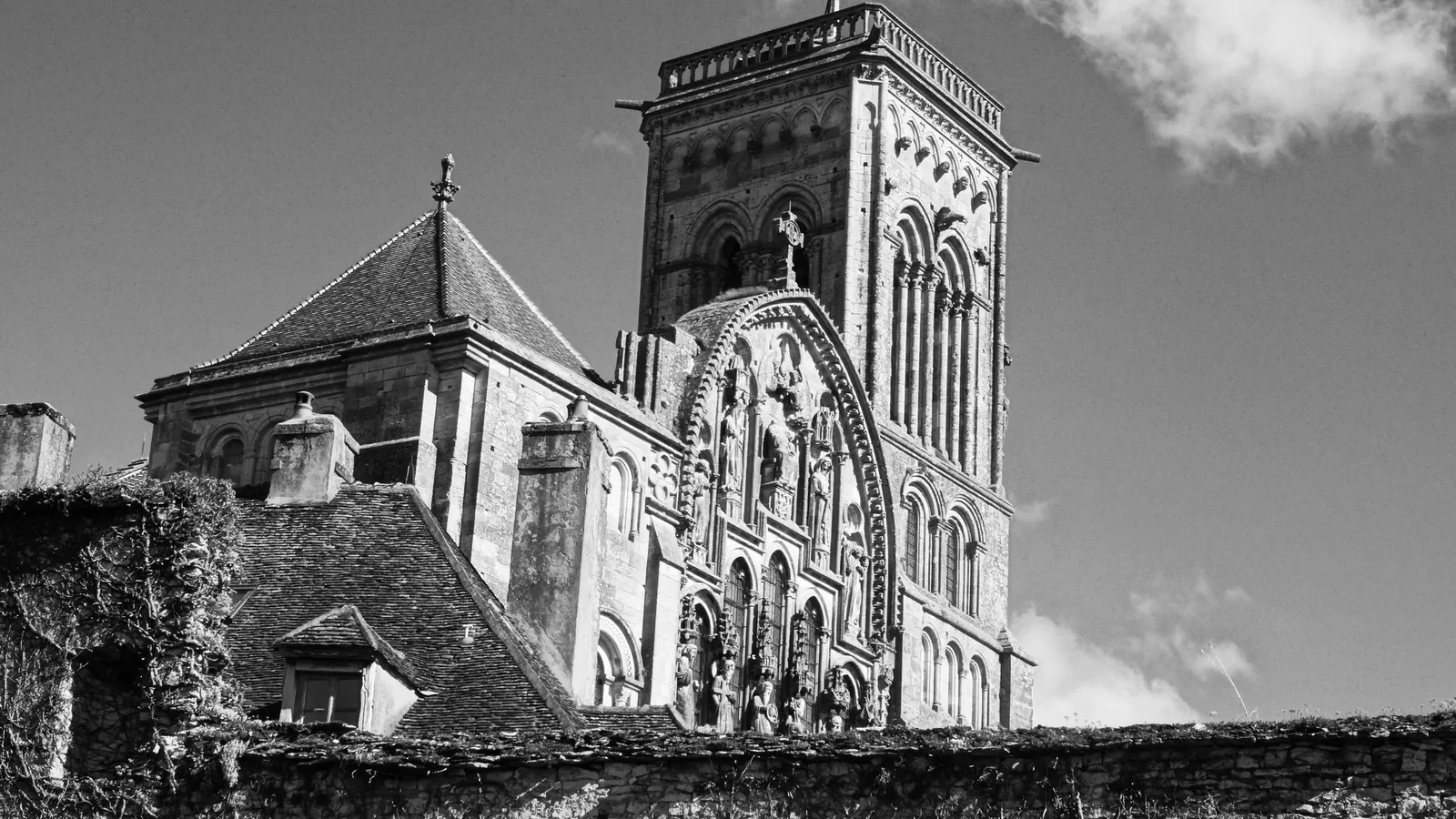
At Vézelay, the other great center of her cult in France, the Romanesque basilica on the hill is dedicated to her, and the Monastic Fraternities of Jerusalem keep its daily prayer.
In art
Artists show Mary Magdalene with long hair and the jar of ointment, at the foot of the Cross, or in the garden at the moment when the risen Christ tells her, “Do not hold me” (John 20:17), the scene called Noli me tangere. French painting of the seventeenth century favored the penitent at prayer, and the Louvre owns the Magdalene by Georges de La Tour, painted about 1640 and bought in 1949, which shows her at night by the light of a lamp, her hand on a skull. At Saint-Maximin the crypt is a funeral monument of the fourth century with four sarcophagi, and the basilica keeps a Passion altarpiece of 1520 by Antoine Ronzen, which includes the earliest known view of the Palace of the Popes in Avignon.
Where to pray
- Saint-Maximin-la-Sainte-BaumeThe Gothic basilica of Sainte-Marie-Madeleine, open every day, whose crypt keeps the relics venerated as hers.
- La Sainte-BaumeThe grotto in the cliff where tradition places her years of penance, kept by Dominican friars, with their hôtellerie on the plain below.
- Saintes-Maries-de-la-MerThe fortified church by the sea in the Camargue, where tradition places her landing with Lazarus, Martha and other disciples.
- VézelayThe Romanesque basilica of Sainte-Marie-Madeleine in Burgundy, the great medieval center of her cult, served by the Monastic Fraternities of Jerusalem.
On our ways: Vézelay, Saintes-Maries-de-la-Mer, Saint-Maximin, La Sainte-Baume.
Questions
Is Mary Magdalene buried in France?
Provençal tradition says so. In 1279 relics venerated as hers were found in the crypt of Saint-Maximin, where they are still kept, and the grotto of La Sainte-Baume is the place where tradition sets her years of penance. In the Middle Ages Vézelay, in Burgundy, was the other great center of her cult.
When is the feast of Saint Mary Magdalene?
July 22.