Saint Joan of Arc
The Maid of Orléans, secondary patroness of Francec. 1412–1431
Feast · May 30, in France
- Where to pray
- Domrémy, Vaucouleurs, Orléans, Reims, Rouen
- Patron of
- Secondary patroness of France, named by Pope Pius XI in 1922.
Life
Joan was born around 1412 at Domrémy, a village on the Meuse, into a peasant family; tradition gives January 6 as her birthday. At her trial she said that her voices first came to her when she was about thirteen, and she named them as Saint Michael, Saint Catherine and Saint Margaret. Over three years, she said, they urged her to go to the help of the Dauphin Charles and to have him crowned at Reims.
In May 1428 she asked Robert de Baudricourt, captain of Vaucouleurs, for an escort to the Dauphin and was sent home. She came back early in 1429 and in February rode out through the gate now called the Porte de France, dressed as a man. Received by Charles at Chinon, she was examined for some three weeks at Poitiers by theologians and canonists. She entered besieged Orléans on April 29, 1429, and on May 8 the English raised the siege.
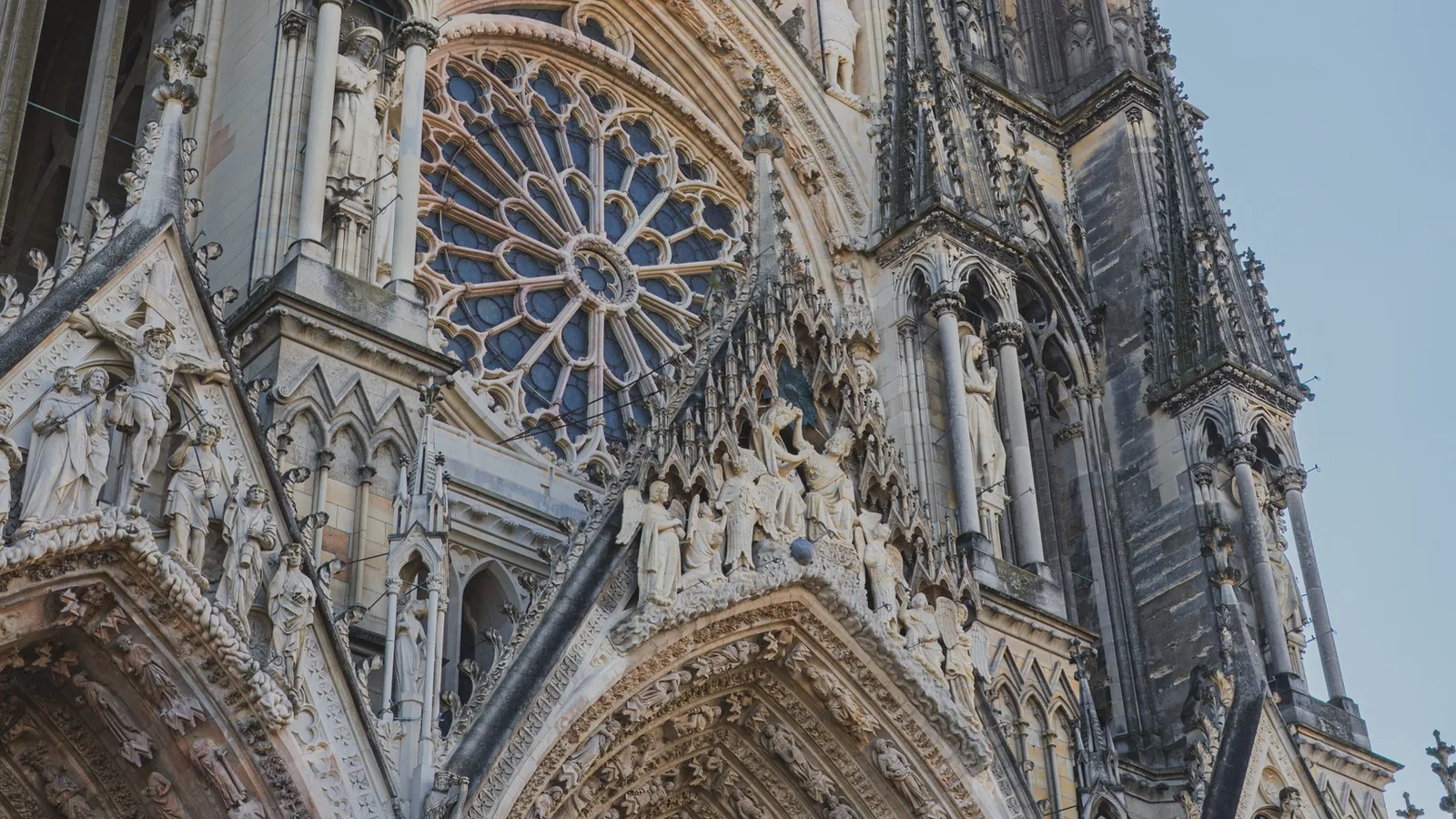
After the victory of Patay on June 18, the army opened the road to Reims, and on July 17, 1429, Charles VII was anointed and crowned in the cathedral, where Joan held a place of honor with her standard. In September she was wounded in an attack on Paris. On May 23, 1430, during a sortie from Compiègne, she was captured by the Burgundians, who later handed her over to the English.
At Rouen a church court led by Pierre Cauchon, bishop of Beauvais, opened her trial on January 9, 1431. Condemned as a relapsed heretic, she was burned alive in the Old Market Square on May 30, 1431, at about nineteen, and her ashes were thrown into the Seine. At the request of her mother and brothers, Pope Callixtus III authorized a new process, and on July 7, 1456, in the archbishop’s palace at Rouen, the judges declared the first trial and its sentence null.
Further reading: Rouen: A Pilgrim’s Guide to the City of Saint Joan of Arc; Mont-Saint-Michel: A Pilgrim’s Guide to the Archangel’s Mount; Reims: A Pilgrim’s Guide to the Cathedral of the Coronations; Joan of Arc in France: The Places of Her Life.
Cult and relics
Pope Leo XIII opened her cause on January 27, 1894. Pope Saint Pius X beatified her in Saint Peter’s Basilica on April 18, 1909, and Pope Benedict XV canonized her there on May 16, 1920. On March 2, 1922, Pope Pius XI confirmed Our Lady of the Assumption as principal patroness of France and named Saint Joan its secondary patroness. Her feast, May 30, is kept in the calendar of France, and the law of July 10, 1920, made the second Sunday of May a national day in her honor.
Orléans keeps her festival each year around May 8, the anniversary of the end of the siege. Rouen holds its own ceremonies every May, with a procession that sets out from the church of Sainte-Jeanne-d’Arc on the Old Market Square, where she died.
In art
Joan is shown in armor with her sword and her standard. In the Louvre, Ingres’s Joan of Arc at the Coronation of Charles VII, painted in 1854, shows her in armor beside the altar of Reims cathedral, and the painter gave his own features to one of her servants. Emmanuel Frémiet’s gilded bronze equestrian statue, set up in 1874 on the Place des Pyramides in Paris, stands near the place where she was wounded in 1429.
Patron of
Secondary patroness of France, named by Pope Pius XI in 1922.
Where to pray
- DomrémyHer birthplace house, open to visitors since it was bought for the public in 1818, and run today by the department of the Vosges, the church where she was baptized, with the statue of Saint Margaret before which she prayed, and the basilica above the village.
- VaucouleursThe town where Robert de Baudricourt gave her an escort in 1429, with the Porte de France and the castle chapel among its Joan of Arc sites.
- OrléansThe cathedral of Sainte-Croix, in the city she freed on May 8, 1429.
- ReimsThe cathedral where Charles VII was crowned in her presence on July 17, 1429.
- RouenThe Old Market Square, where she died, with the church of Sainte-Jeanne-d’Arc on the square.
On our ways: Compiègne, Rouen, Reims, Domrémy, Vaucouleurs, Orléans, Chinon, Auxerre.
Questions
Where was Joan of Arc born?
At Domrémy, in Lorraine. Her birthplace house has been open to visitors since it was bought for the public in 1818, and the church where she was baptized stands beside it.
Where did Joan of Arc die?
In Rouen, on the Old Market Square, where the church of Sainte-Jeanne-d’Arc now stands.
When is the feast of Saint Joan of Arc?
May 30 in the calendar of France, and France keeps a national day in her honor on the second Sunday of May.