Saint Bruno
Founder of the Carthusian Orderc. 1030–1101
Feast · October 6
- Where to pray
- Saint-Pierre-de-Chartreuse, Grande Chartreuse, Reims
- Patron of
- Calabria, and by tradition invoked for those possessed by evil spirits.
Life
Bruno was born at Cologne about 1030; tradition connects him with the Hartenfaust family. He studied at the collegiate church of Saint Cunibert in Cologne and then at the cathedral school of Reims, and he was probably ordained a priest about 1055. Archbishop Gervase called him back to Reims to teach, and in 1057 he became head of the cathedral school, a post he held for some twenty years. Among his pupils was Eudes of Châtillon, the future Pope Urban II. In 1075 he was made chancellor of the church of Reims.
The new archbishop, Manasses of Gournai, gave scandal by his conduct, and at the Council of Autun in 1077 Bruno and two other canons obtained his suspension. Manasses had their houses destroyed and their goods seized, and Bruno went to Rome to press the case; Manasses was deposed in 1080 and fled. The clergy then proposed Bruno for the see. He had already vowed with two friends, Raoul and Fulcius, to leave the world, and he went first to Robert of Molesme and stayed for a short time at Sèche-Fontaine, near Molesme.
In 1084 he came with six companions to Saint Hugh, bishop of Grenoble, who had seen them in a dream as seven stars. They were Landuin, the two Stephens of Bourg and of Die, Hugh the chaplain, and two laymen, Andrew and Guérin, who became the first lay brothers. The bishop installed them in the remote valley of the Chartreuse, in the mountains north of Grenoble, and their first monastery stood at the place now called Notre-Dame de Casalibus. Bruno wrote no formal rule; his customs, which modified the Rule of Saint Benedict, became the basis of Carthusian life.
In 1090 Urban II called his former teacher to Rome as an adviser. Bruno declined the archbishopric of Reggio in Calabria and obtained leave to return to solitude, and in 1091 Count Roger of Sicily and Calabria gave him land in the diocese of Squillace, where he founded the hermitage of Santa Maria della Torre. In one of his letters, quoted by Pope Benedict XVI, he wrote that he lived “in a rather faraway hermitage” with some religious brothers. He died there on October 6, 1101, after a public profession of faith in the Trinity and in the real presence of Christ in the Eucharist.
Cult and relics
Bruno was never canonized by formal process. His bones were found in Calabria in 1513, and in 1514 Pope Leo X allowed the Carthusian Order to keep his feast; on February 17, 1623, Pope Gregory XV extended it to the whole Church, a recognition of the kind called equipollent canonization. His feast is kept on October 6 in the General Roman Calendar. His relics are in Calabria, at Serra San Bruno, where Pope Benedict XVI prayed Vespers in the charterhouse on October 9, 2011. For the nine hundredth anniversary of his death, Pope John Paul II wrote to the Carthusians on May 15, 2001, that “the search for God in contemplation is inseparable from love for the brethren.”
The first monastery in the Chartreuse was destroyed by an avalanche in 1132, and the church of the present monastery was consecrated in 1133. The Grande Chartreuse is still the mother house of the order and the residence of its prior general, and it is closed to visitors. In 2025 there were twenty-one Carthusian monasteries in the world, with about 350 monks and nuns.
In art
Bruno is shown in the white habit of his order, contemplating a skull, with a book and a cross; sometimes he wears a halo of seven stars or holds a scroll with the words O Bonitas. In the seventeenth century Eustache Le Sueur painted a cycle of his life for the small cloister of the Carthusians of Paris. The Louvre keeps an eighteenth-century copy in red chalk by Pierre Subleyras of its fifteenth scene, in which Bruno receives a message from Pope Urban II.
Patron of
Patron of Calabria, and by tradition invoked for those possessed by evil spirits.
Where to pray
- Saint-Pierre-de-ChartreuseThe Musée de la Grande Chartreuse in La Correrie, about a mile and a quarter from the monastery, on the life of the Carthusians; it is open in season and in 2026 closes for the winter on November 11.
- Grande ChartreuseThe monastery, where Carthusian monks still live, cannot be visited; a short walk leads to a viewpoint over it, and a forest path leads to the chapel of Notre-Dame de Casalibus, on the site of the first monastery, and the nearby chapel of Saint-Bruno.
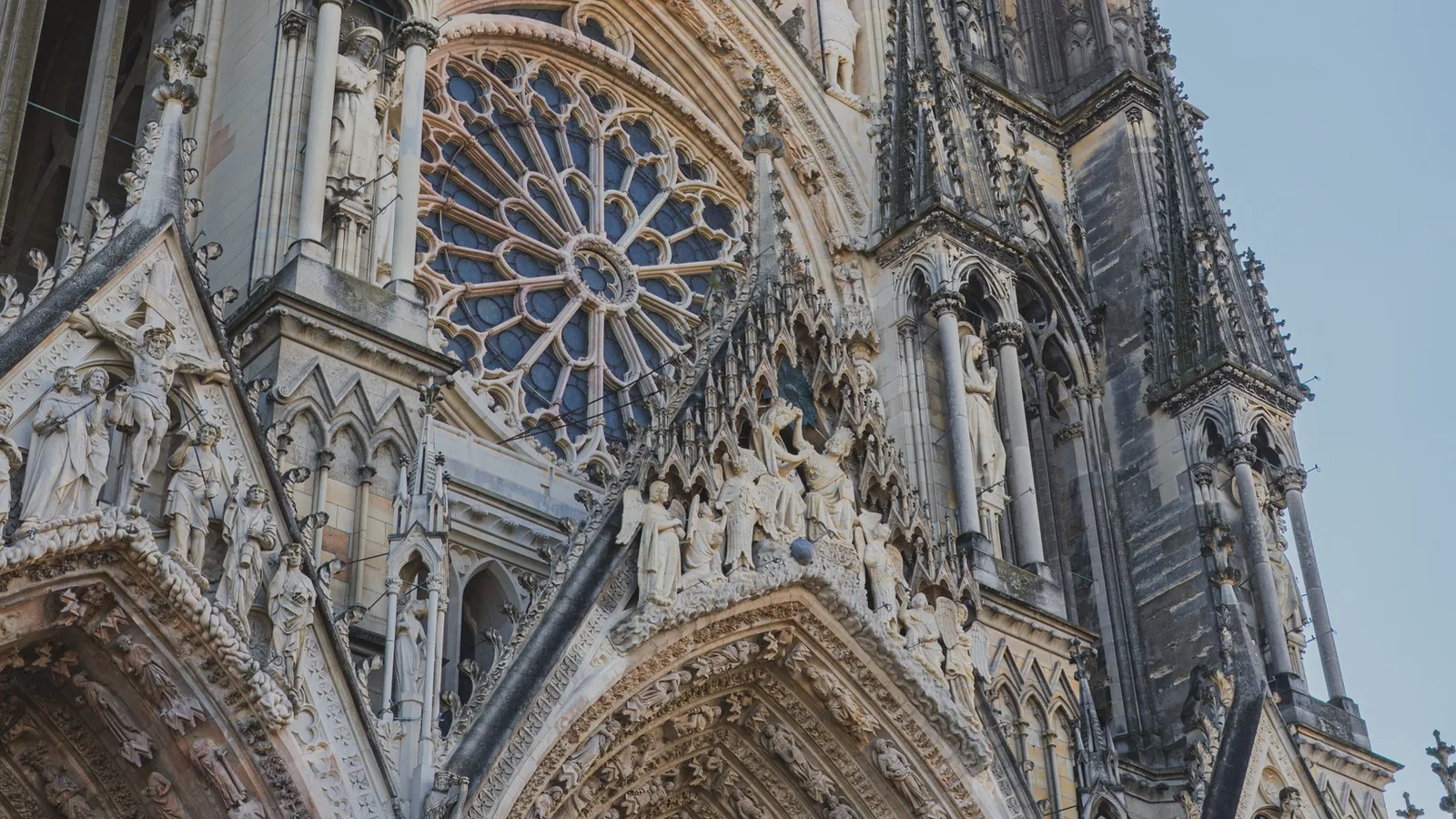
- ReimsThe cathedral of Notre-Dame, seat of the church whose school Bruno directed from 1057 and of which he was chancellor.
On our ways: Reims.
Sources
- St. Bruno, Catholic Encyclopedia (New Advent)
- Saint Bruno the Carthusian, Britannica
- Message of John Paul II for the ninth centenary of the death of Saint Bruno, May 15, 2001, Holy See
- Celebration of Vespers at the Charterhouse of Serra San Bruno, homily of Benedict XVI, October 9, 2011, Holy See
- Bruno of Cologne, Wikipedia
- Monastère et Musée de la Grande Chartreuse, Chartreuse Tourisme
- Musée de la Grande Chartreuse, Pays Voironnais Tourisme
- Saint Bruno reçoit un message du pape Urbain II, copy by Pierre Subleyras, Musée du Louvre
Facts checked against these sources on .