Saint Gregory of Tours
Bishop of Tours and historian of the Franksc. 538–594
Feast · November 17, in the Roman Martyrology
- Where to pray
- Tours, Clermont-Ferrand
Life
Gregory was born at Clermont, in Auvergne, probably on November 30, 538 or 539, and was first named Georgius Florentius. His father, Florentius, was a senator of Clermont, and his mother, Armentaria, came of a family that had given bishops to Langres and Lyon; he took the name Gregory in memory of his great-grandfather, Bishop Gregory of Langres. On his father’s side he claimed descent from Vettius Epagathus, one of the martyrs of Lyon in 177. After his father’s early death he was brought up by his uncle Gallus, bishop of Clermont, and then by the priest Avitus, who later became bishop of the city.
An unexpected recovery from a grave illness turned him toward the service of the Church, and he was ordained deacon. When Bishop Euphronius of Tours died in 573, Gregory was chosen to succeed him at the wish of King Sigebert and Queen Brunhild. He was about thirty-four, and according to the New Catholic Encyclopedia he was consecrated by Bishop Egidius of Reims. He claimed kinship with thirteen of the eighteen bishops of Tours before him. He rebuilt the cathedral, which had burned under Euphronius, restored other churches and promoted the cult of Saint Martin, whose tomb at Tours was a major center of pilgrimage.
Tours lay in the middle of the quarrels among the Frankish kings of his time. King Chilperic disliked the bishop, and in 580 Gregory was tried at the council of Berny-Rivière on a charge of slandering Queen Fredegund. He denied it on oath and was acquitted, helped in part by his friend the poet Venantius Fortunatus. After the Treaty of Andelot in 587 Tours belonged to Childebert II, who with his mother Brunhild trusted Gregory and often sent him on missions. In 589 and 590 he was drawn into the revolt of the nuns of the Holy Cross at Poitiers against their abbess.
His Ten Books of Histories, often called the History of the Franks, are the main source for the Merovingian kingdom of the sixth century, and they tell, among much else, of the baptism of Clovis. He insisted that the ten books be copied together. He also wrote seven books of miracles, four of them on the miracles of Saint Martin and others on the glory of the martyrs and of the confessors, a Life of the Fathers with twenty lives of holy men, and a commentary on the Psalms. He worked on the Histories until shortly before his death at Tours on November 17, 594; some sources give 593.
Cult and relics
Gregory was honored as a saint in the Middle Ages, before canonization was reserved to the pope, and a Life of Gregory written in the tenth century attests to his cult. His feast is kept on November 17. He is often called the father of French history.
In art
At Tours a calvary in the square before the south front of the basilica of Saint-Martin shows Martin sharing his cloak, with statues of Saint Perpetuus and Saint Gregory of Tours beside it. In Paris a nineteenth-century statue of Gregory by the sculptor Jean Marcellin stands at the Louvre.
Where to pray
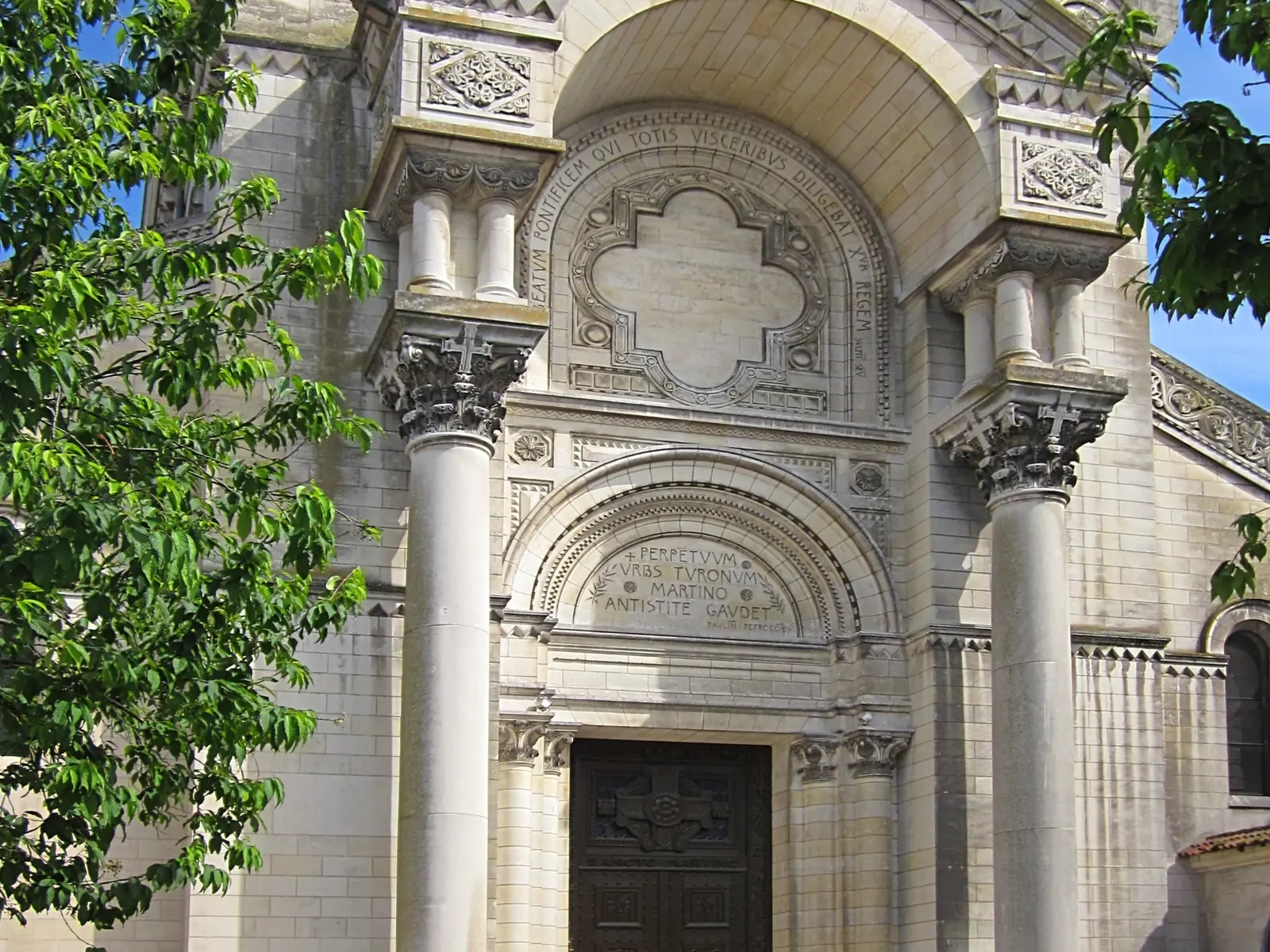
- Tours, basilica of Saint-MartinThe basilica of Saint-Martin, with the tomb of Saint Martin, whose miracles Gregory recorded, and outside it a calvary with Gregory’s statue.
- Tours, cathedral of Saint-GatienThe cathedral of Saint-Gatien, church of the bishops of Tours; Gregory rebuilt the cathedral of his day after a fire.
- Clermont-FerrandHis native city, where he was raised by his uncle Saint Gallus, bishop of Clermont.
On our ways: Tours, Clermont-Ferrand.