Blessed Anne-Marie Javouhey
Founder of the Sisters of Saint Joseph of Cluny1779–1851
Feast · July 15, in the Sisters of Saint Joseph of Cluny
- Where to pray
- Paris, Chalon-sur-Saône, Cluny, Jallanges
Life
Anne-Marie Javouhey, called Nanette in her family, was born on November 10, 1779, at Jallanges, near Seurre in Burgundy, according to her congregation, and was baptized at Seurre. She grew up at Chamblanc, where her parents, Balthazar and Claudine Javouhey, were prosperous farmers. During the Revolution she helped hunted priests to escape arrest, and on November 11, 1798, at a Mass celebrated in secret, she consecrated her life to God.
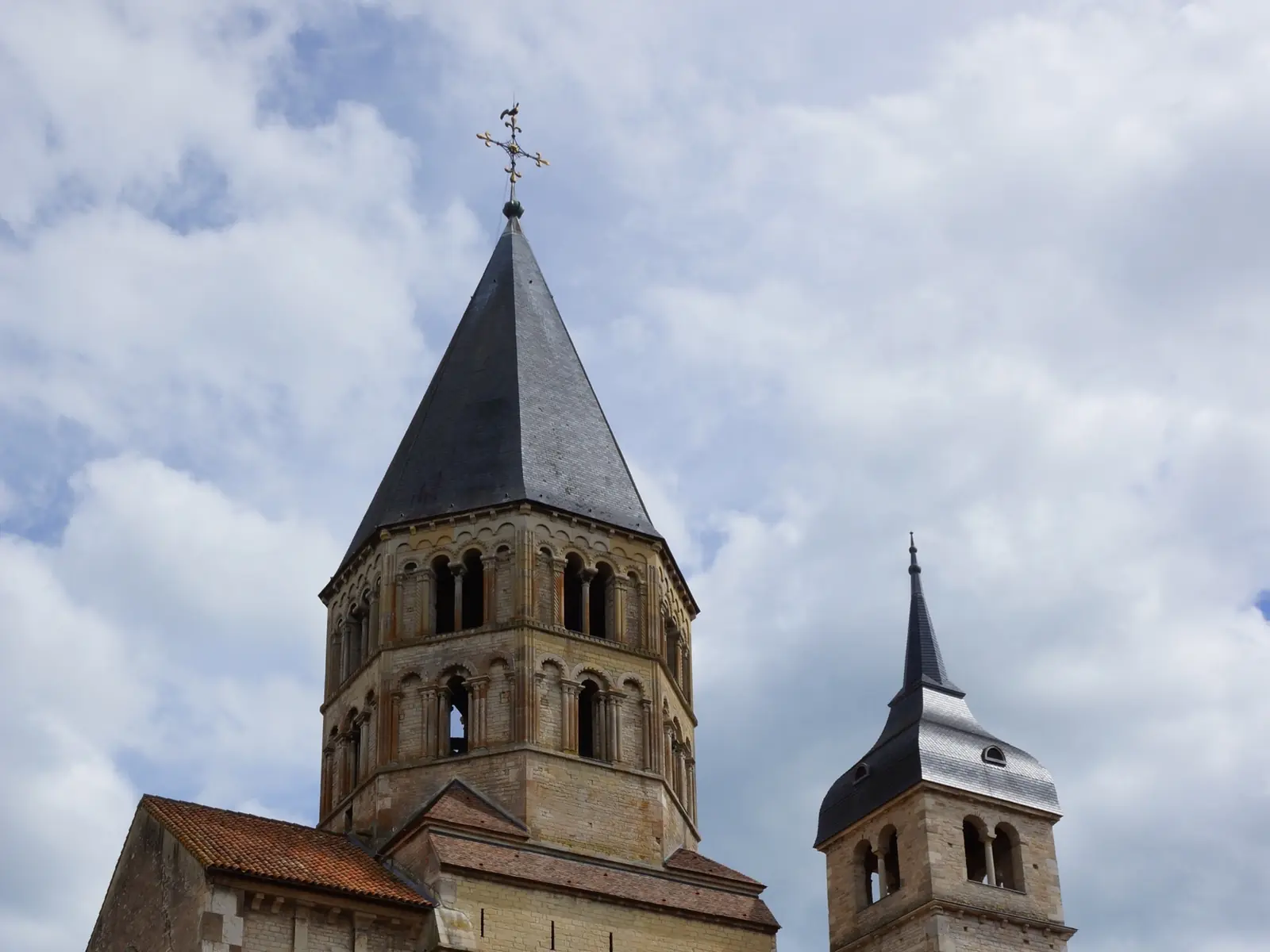
She tried religious life with the Sisters of Charity whom Jeanne-Antide Thouret was gathering at Besançon, and then with the Trappists of Dom de Lestrange at La Valsainte, in Switzerland, before returning to Burgundy. The Emperor approved the statutes of her society on December 12, 1806, and on May 12, 1807, she and eight companions made their first vows before the bishop of Autun in the church of Saint-Pierre at Chalon-sur-Saône. In 1812 her father bought the former convent of the Recollects in the town of Cluny, and the congregation took the name of Saint Joseph of Cluny from that house; the name has no connection with the Benedictine abbey of Cluny.
From 1817 her sisters went to the island of Bourbon, now Réunion, and in 1822 she herself spent two years in Senegal, Gambia and Sierra Leone. In 1828, at the request of the French government, she went to Mana, in French Guiana, with a party of sisters and settlers, and she stayed until 1833. In 1835 she returned to Mana, where the government entrusted to her about five hundred enslaved Africans to be prepared for their freedom; her congregation speaks of 185 people freed through her in 1838. On September 19, 1840, the first three Senegalese priests she had helped to form were ordained in Paris.
She came back to France in August 1843, after the liberation of the slaves at Mana. She met with opposition from Church authorities, and she still founded over thirty houses in French dioceses. In 1849 she bought a house on the rue du Faubourg Saint-Jacques in Paris and moved the community there on November 1, and she died in that house on July 15, 1851.
Cult and relics
She was buried at Senlis. Her cause was introduced on February 11, 1908; in 1949 her relics were brought from Senlis to the mother house in Paris, and Pope Pius XII beatified her in Rome on October 15, 1950. After the beatification her reliquary was placed under the altar of the chapel of the mother house, and the reliquary of her heart is kept in the crypt. In 2004 Chamblanc, Seurre and Jallanges were included in UNESCO’s project of the Route of the Abolition of Slavery, and in 2011 descendants of the people freed in 1838 planted “forests of memory” in the three villages. Her sisters keep her feast on July 15.
In art
In 1981 the French Post honored her with a stamp, drawn and engraved in intaglio by Pierre Forget, which went on sale in advance on February 7, 1981, in Paris and at Jallanges, her native village.
Where to pray
- Paris, mother house of the Sisters of Saint Joseph of ClunyAt 21 rue Méchain, in the fourteenth arrondissement, the chapel where her reliquary lies under the altar, and the crypt with the reliquary of her heart.
- Chalon-sur-Saône, Church of Saint-PierreThe church where she and eight companions made their first vows on May 12, 1807.
- Cluny, house of the SistersThe former convent of the Recollects in the town, bought in 1812, which gave the congregation its name; a community of the sisters receives visitors there.
- Jallanges, Seurre and ChamblancThe villages of her birth, baptism and childhood in the Côte-d’Or, where a community of the sisters receives visitors.
On our ways: Cluny.